Brought to you by Dark Kidney Film.
Monday, August 1, 2011
Tuesday, July 26, 2011
Cavatappi Pasta With Mushrooms and Sausage
Ingredients
- 3 tablespoons olive oil
- 1 small onion, finely chopped
- 1 pound mushrooms, trimmed, cleaned and finely chopped
- 1 teaspoon kosher salt, plus 3/4 teaspoon
- 3/4 cup dry Marsala wine
- 1/4 cup white wine
- 1 pound cavatappi pasta
- 1 pound of a pork sausage (ie: garlic and pepper)
- 3/4 cup grated Parmesan
- 1 cup cream
- 1/2 cup chopped fresh flat-leaf parsley
- 1 teaspoon freshly ground black pepper
Directions
Remove sausage from casing and cook in skillet on medium/high heat till cooked through (about 10 mins) and set aside. Place the olive oil in a large, heavy skillet over medium-high heat. Add the onions and cook for 1 minute. Add the mushrooms and 1 teaspoon of the salt. Saute, stirring occasionally, until all the moisture has evaporated and the mushrooms have cooked down, about 10 minutes. Add the marsala and continue cooking until almost all the wine has evaporated, about 5 minutes then add the parmesan and cream.
Meanwhile, bring a large pot of water to a boil over high heat. Stir in remaining salt. Add the pasta and cook until tender but still firm to the bite, stirring occasionally, about 8 to 10 minutes. Drain pasta and add it into the mushrooms, marsala and onions, parmesan and cream and sausage and cook about 3 more minutes. Stir in the parsley and pepper. Transfer to a serving bowl and serve.
Adapted from Giada.
Thursday, July 7, 2011
McNulty's Tea & Coffee
An establishment in the West Village, NYC - keepin' it real all these years...
Love getting our coffee beans here!
Tuesday, July 5, 2011
Independence Hall - Where It All Began July 4, 1776
"We hold these truths to be self-evident,
that all men are created equal,
that they are endowed by their Creator
that all men are created equal,
that they are endowed by their Creator
with certain unalienable Rights, that among
these are Life, Liberty and the pursuit of Happiness."
- Within The Deceleration of Independence -
Sunday, July 3, 2011
Wednesday, June 22, 2011
A Father's Love
"Let me tell you a secret about a father's love,
A secret that my daddy said was just between us.
You see Daddies don't just love their children every now and then.
It's a love without end, amen, it's a love without end, amen."
- George Strait
Sunday, June 12, 2011
Merchant's Gate
Unveiled: 1913
Sculpted: 1901-1913
Architect: H. Van Buren Magonigle • USA
Sculptor: Attilio Piccirilli 1901-1913 • Italy
Gift of the National Maine Monument Fund Committee
It is a massive 44-foot limestone pylon, crowned at the top with a gilded bronze sculpture of Columbia Triumphant in a seashell chariot pulled by three hippocampi, sea horses that signifies the United States' dominance of the seas. At the pylon's base, surrounding the ship are the mythological figures, Victory, Peace, Courage, Fortitude and Justice.
Though the destruction of the Maine as it sank in the harbor of Havana, Cuba claiming the lives of 266 seamen, was later revealed to be a terrible accident the popular jingoistic slogan, "Remember the Maine" lives on.
Architect: H. Van Buren Magonigle • USA
Sculptor: Attilio Piccirilli 1901-1913 • Italy
Gift of the National Maine Monument Fund Committee
At the entrance of Merchants' Gate, the main gateway into Central Park, stands the colossal marble statue and fountain of the Maine Monument. A powerful 1913 Beaux Arts monument to commemorate the controversial sinking of the battleship Maine in 1898 and created in a 1901 design contest sponsored by a Spanish-American War commission vice-chaired by media magnate William Randolph Hearst who had a driving interest in promoting the cause.
It is a massive 44-foot limestone pylon, crowned at the top with a gilded bronze sculpture of Columbia Triumphant in a seashell chariot pulled by three hippocampi, sea horses that signifies the United States' dominance of the seas. At the pylon's base, surrounding the ship are the mythological figures, Victory, Peace, Courage, Fortitude and Justice.
Though the destruction of the Maine as it sank in the harbor of Havana, Cuba claiming the lives of 266 seamen, was later revealed to be a terrible accident the popular jingoistic slogan, "Remember the Maine" lives on.
Cousins....:'Are Two Of A Kind'
I ran across this photo of me with my sister Ashley and our cousins...
(L to R beside me Kc, Megan, and Lindsey).
Love this photo!
Monday, June 6, 2011
Basic Baked Lemon Butter Cod
Ingredients:2 garlic cloves, chopped
1/4 cup chopped fresh Italian parsley
1/4 cup of white wine
2 cups ritz crackers or panko crumbs
Juice of 1 lemon
1 lemon for lemon zest and lemon slices/wedges for serving
1 1/2 pound wild cod fish filets7 tablespoons butter, melted
salt and pepper
Directions:
Preheat oven to 350 degrees Fahrenheit.
Heat butter and put in 9 x 9 dish add wine lemon juice and garlic – mix.
Place the cod pieces, side by side, in an oven-safe baking dish (preferably glass). Sprinkle the fish with salt, pepper and make sure to dip both sides in butter mixture. Generously top each piece of fish with the crumbs, gently pressing them into the top of the fish. (Note: The crumbs will only be on the top).
Bake for 25 minutes, or until the fish is opaque, but still moist, in the center.
Remove from oven and add fresh parsley and lemon zest. Serve with a lemon slice.
Serves: 2.
Serve with broccolini. Saute with olive oil and 1 garlic clove over medium heat - cover and stir often. Will be tender and ready to serve in 10 mins.
Tuesday, May 31, 2011
Millinery
I love the scene in "Hello Dolly" where Cornelius Hackle and Barnaby Tucker go into the Millinery shop where Irene Molloy and Minnie are working. I imagined visiting a hat shop in the big apple myself someday. A few weeks ago at an event I had the pleasure of meeting a lady who owns a Millinery in NYC, Ellen Christine Millinery. Her hats have gotten around......
Monday, May 30, 2011
Thursday, May 26, 2011
Books To Check Out
A few non-fiction books to check out:
The article that Gloria Vanderbilt's son Anderson Cooper wrote for
Vogue was very well written and insightful. When I first visited the
Vanderbilt's summer home in Newport I began to wonder about Gloria. Good reads!
Gloria Vanderbilt Photographed by Horst for Vogue, 1966
Gloria Vanderbilt - Anderson Cooper pays tribute to his mother in Vogue....
"I don’t really know who the woman in this photograph is. She is my mom, of course, Gloria Vanderbilt—I recognize the face, the look in her eyes, the shape of her nose—but she has lived so many different lives, inhabited so many different worlds, that in this picture, as in many photos, I find it hard to really see her. Among other things, she’s been an actress, an artist, a designer, a writer, a wife, a mother, a lover, a victim, and a survivor. Every few years she seems to shed her old self, and is born anew.
The photo was taken by Horst in April 1966. My mom is wearing a Mainbocher dress and is in a grand old town house on Sixty-seventh off Park Avenue, where she lived with my father, Wyatt Cooper, whom she married in 1964, and my brother Carter, who was born in 1965. I am not yet born. In fact, I won’t be conceived for another seven months.
We lived in the house for another five years or so after I arrived, and though I recall some of the rooms, I’m not sure which one this picture was taken in. The one I remember most was a bedroom my mother covered entirely in patchwork quilts: the walls, the ceiling, the furniture, she’d even glued quilts to the floor and had them coated with polyurethane. It was like being inside a collage. I’ve never seen anything like it since.
My mom is 42 years old in this photograph, a year younger than I am now. She looks so much more grown up than I feel. I suppose all children, no matter what age, feel that about their parents.
“I remember being completely fulfilled, contented, and happy,” my mom said when I asked her about the photograph. Contentment is something my mom rarely admits to. She and I are similar in that way. We are both restless, always searching, looking into the future at what is coming next.
They sicken of the calm, who knew the storm,” she often says, quoting her friend Dorothy Parker, who died four days after I was born and was laid to rest in another Mainbocher dress my mom gave her.
I have never seen this photo before. It’s a beautiful picture—elegant, stylish—but it’s not really her at all. I think it says more about the person taking the picture than it says about my mom. It is a photo of how Horst, or perhaps some magazine art directors, saw her—who they thought she was or should be. It is not how my mom saw herself, and it certainly is not who she is now.
Yes, drape that arm around that pillow,” I imagine Horst saying, “and yes, the head, try resting it against that other one. Yes, perfect, languid but glamorous. Yes, as if you are just relaxing before guests arrive.
There certainly were glamorous parties in that house on Sixty-seventh Street. I recently found a photograph of me shaking Charlie Chaplin’s hand when he arrived for a party in his honor. He had just returned to the United States after many years in exile in Switzerland. My parents had shown us his films, but I was surprised to discover the youthful little tramp had become a white-haired man well into his 80s. I remember dinners with Truman Capote, and Lillian Gish. Al Hirschfeld and Charles Addams used to draw pictures for my brother and me.
The elegant life portrayed in the picture was real. That was my mom’s house, and that probably was her dress, and the needlepoint chair in the foreground was embroidered by my mother’s aunt Thelma. But the photograph focuses only on a part of my mom’s life; it doesn’t really capture her strength, her passion, the drive that propelled her forward through great successes and failures.
Unlike others who came from privileged backgrounds, who spent their days at country clubs or gossiping over long lunches, my mom has always had a relentless determination—a need to create, to achieve on her own—born of pain and loss.
My mom’s father died when she was an infant, and at the age of ten, she was taken away from her own mother, the result of a bitter custody battle begun by her father’s sister Gertrude Vanderbilt Whitney. At the time, the height of the Depression, the battle of the Vanderbilts made daily headlines. The one constant in my mom’s early life was her beloved nurse, whom she called Dodo. When the judge awarded custody of my mother to her aunt, a woman she barely knew, he also banished Dodo from her life.
I have a black-and-white newsreel from that time, which shows my ten-year-old mom arriving in court, surrounded by a phalanx of fedora-wearing bodyguards. She is staring down, her eyes glazed. She is focused inward, and I see that she has already begun the internal dialogue she continues to carry on with herself to this day. Under the intense pressure of that early loneliness and chaos, and the fame that followed, my mom formed a rock-hard core that nothing could crack.
I sometimes think she would have been better off without that last name. It came with great advantages, no doubt, but great baggage as well, so many preconceived notions that color how other people see you. I am certainly glad I don’t have that name.
The problem with drive, however, is that if you have it, you are rarely satisfied, and you must continue to move forward toward new things, find new skins to inhabit. That’s another reason photos I see of her so often fail to capture her essence. They are mere snapshots in time, poses she is trying on and will soon move away from.
She has not always been successful, but no level of failure or betrayal or tragedy has diminished her drive to create. She’s what is sometimes called a survivor, but she has none of the toughness that term so often implies.
My mom is 86 now, though she has stopped celebrating birthdays and no longer thinks about age in the way she once did. She is the most youthful person I know and still believes great opportunity and great love is just around the corner. The funny thing is, if you spend even a short amount of time with her, you start to believe it as well.
She has a large art studio in an apartment below the one she lives in, and on most days slips down the back stairs to paint or write. She doesn’t call me often, because she is always concerned about interrupting me at work, but she has finally mastered E-mail and sends them frequently, inviting me to come look at a new painting or a new story she is working on.
If I were taking a photograph of her now, it would be of how she appears when I visit her. She is ensconced on a couch very similar to the one in the Horst photo, but she is barefoot because that is how she is at home when talking with me or with friends late into the night. She does not have any makeup on, because that is how she is most comfortable, most beautiful.
All around her are the objects she has collected through her many lives: shiny silver fish in a silver bowl; small boxes she bought in Europe; a Mexican cross from a long-ago trip. Every object has a story, a history. Nearby is the same needlepoint chair embroidered by her mother’s sister.
She may wrap a hand around a pillow, and lay her head back on another one, but she has none of the icy cool of the woman posing for Horst. No longer limited by old concerns, by things that once seemed important, even urgent, she is focused only on what she cares about, excited by what lies ahead, and able to laugh about all that she has been through, all the ways she has seen herself and been seen by others."
Article as published in the November 2010 issue of Vogue, on newsstands nationwide October 26th.
They sicken of the calm, who knew the storm,” she often says, quoting her friend Dorothy Parker, who died four days after I was born and was laid to rest in another Mainbocher dress my mom gave her.
I have never seen this photo before. It’s a beautiful picture—elegant, stylish—but it’s not really her at all. I think it says more about the person taking the picture than it says about my mom. It is a photo of how Horst, or perhaps some magazine art directors, saw her—who they thought she was or should be. It is not how my mom saw herself, and it certainly is not who she is now.
Yes, drape that arm around that pillow,” I imagine Horst saying, “and yes, the head, try resting it against that other one. Yes, perfect, languid but glamorous. Yes, as if you are just relaxing before guests arrive.
There certainly were glamorous parties in that house on Sixty-seventh Street. I recently found a photograph of me shaking Charlie Chaplin’s hand when he arrived for a party in his honor. He had just returned to the United States after many years in exile in Switzerland. My parents had shown us his films, but I was surprised to discover the youthful little tramp had become a white-haired man well into his 80s. I remember dinners with Truman Capote, and Lillian Gish. Al Hirschfeld and Charles Addams used to draw pictures for my brother and me.
The elegant life portrayed in the picture was real. That was my mom’s house, and that probably was her dress, and the needlepoint chair in the foreground was embroidered by my mother’s aunt Thelma. But the photograph focuses only on a part of my mom’s life; it doesn’t really capture her strength, her passion, the drive that propelled her forward through great successes and failures.
Unlike others who came from privileged backgrounds, who spent their days at country clubs or gossiping over long lunches, my mom has always had a relentless determination—a need to create, to achieve on her own—born of pain and loss.
My mom’s father died when she was an infant, and at the age of ten, she was taken away from her own mother, the result of a bitter custody battle begun by her father’s sister Gertrude Vanderbilt Whitney. At the time, the height of the Depression, the battle of the Vanderbilts made daily headlines. The one constant in my mom’s early life was her beloved nurse, whom she called Dodo. When the judge awarded custody of my mother to her aunt, a woman she barely knew, he also banished Dodo from her life.
I have a black-and-white newsreel from that time, which shows my ten-year-old mom arriving in court, surrounded by a phalanx of fedora-wearing bodyguards. She is staring down, her eyes glazed. She is focused inward, and I see that she has already begun the internal dialogue she continues to carry on with herself to this day. Under the intense pressure of that early loneliness and chaos, and the fame that followed, my mom formed a rock-hard core that nothing could crack.
I sometimes think she would have been better off without that last name. It came with great advantages, no doubt, but great baggage as well, so many preconceived notions that color how other people see you. I am certainly glad I don’t have that name.
The problem with drive, however, is that if you have it, you are rarely satisfied, and you must continue to move forward toward new things, find new skins to inhabit. That’s another reason photos I see of her so often fail to capture her essence. They are mere snapshots in time, poses she is trying on and will soon move away from.
She has not always been successful, but no level of failure or betrayal or tragedy has diminished her drive to create. She’s what is sometimes called a survivor, but she has none of the toughness that term so often implies.
My mom is 86 now, though she has stopped celebrating birthdays and no longer thinks about age in the way she once did. She is the most youthful person I know and still believes great opportunity and great love is just around the corner. The funny thing is, if you spend even a short amount of time with her, you start to believe it as well.
She has a large art studio in an apartment below the one she lives in, and on most days slips down the back stairs to paint or write. She doesn’t call me often, because she is always concerned about interrupting me at work, but she has finally mastered E-mail and sends them frequently, inviting me to come look at a new painting or a new story she is working on.
If I were taking a photograph of her now, it would be of how she appears when I visit her. She is ensconced on a couch very similar to the one in the Horst photo, but she is barefoot because that is how she is at home when talking with me or with friends late into the night. She does not have any makeup on, because that is how she is most comfortable, most beautiful.
All around her are the objects she has collected through her many lives: shiny silver fish in a silver bowl; small boxes she bought in Europe; a Mexican cross from a long-ago trip. Every object has a story, a history. Nearby is the same needlepoint chair embroidered by her mother’s sister.
She may wrap a hand around a pillow, and lay her head back on another one, but she has none of the icy cool of the woman posing for Horst. No longer limited by old concerns, by things that once seemed important, even urgent, she is focused only on what she cares about, excited by what lies ahead, and able to laugh about all that she has been through, all the ways she has seen herself and been seen by others."
Article as published in the November 2010 issue of Vogue, on newsstands nationwide October 26th.
Tuesday, May 24, 2011
Weekend Happenings
Out For A Southern Dinner
"Chicken Fried Steak"
Picnic In Riverside Park
Enjoying Tribeca
In Madison Square Park
Dining In Curry Hill
Tuesday, May 17, 2011
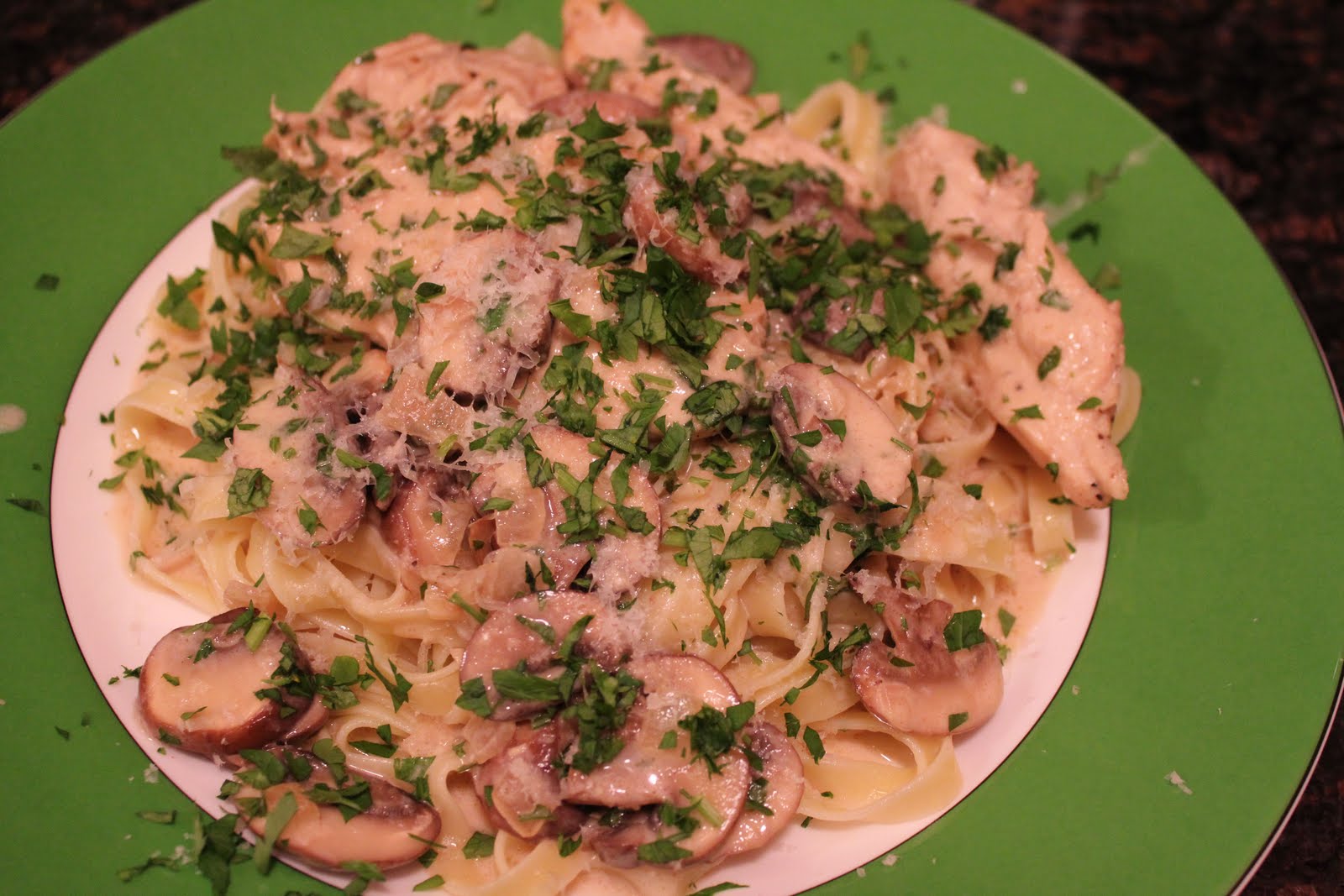
Chicken Mustard Mascarpone Marsala
Ingredients
- 1 1/2 pounds boneless skinless chicken breasts, each breast cut crosswise into 3 pieces
- Salt and freshly ground black pepper
- 2 tablespoons olive oil
- 5 tablespoons butter, divided
- 3/4 cup chopped onion or mix of shallot onion
- 1 pound cremini mushrooms, sliced
- 2 tablespoons minced garlic
- 1 cup dry Marsala wine
- 1 cup (8 ounces) mascarpone cheese
- 2 tablespoons Dijon mustard
- 2 tablespoons chopped fresh Italian parsley leaves, plus whole sprigs, for garnish
- 12 ounces dried fettuccine
Directions
Sprinkle the chicken with salt and pepper. Heat the oil in a heavy large skillet over high heat. Add the chicken and cook just until brown, about 4 minutes per side. Transfer the chicken to a plate and cool slightly.
While the chicken cools, melt 2 tablespoons of butter to the same skillet over medium-high heat, then add the onion and saute until tender, about 2 minutes. Add the mushrooms and garlic and saute until the mushrooms are tender and the juices evaporate, about 12 minutes. Add the wine and simmer until it is reduced by half, about 4 minutes. Stir in the mascarpone and mustard. Cut the chicken breasts crosswise into 1/3-inch-thick slices. Return the chicken and any accumulated juices to the skillet. Simmer, uncovered, over medium-low heat until the chicken is just cooked through and the sauce thickens slightly, about 2 minutes. Stir in the chopped parsley. Season the sauce, to taste, with salt and pepper.
Meanwhile, bring a large pot of salted water to a boil. Add the fettuccine and cook until al dente, stirring occasionally, about 8 minutes. Drain. Toss the fettuccine with 3 tablespoons of butter and season, to taste, with salt and pepper. Swirl the fettuccine onto serving plates. Spoon the chicken mixture over top. Garnish with parsley sprigs and serve.
Wednesday, May 11, 2011
Monday, May 9, 2011
Almond Crusted Chicken
My sister told me about this recipe - ENJOY!
Ingredients
- 1 cup unblanched almonds
- 1 1/2 teaspoons Spanish pimenton or paprika
- 2 large eggs
- Kosher salt and freshly ground black pepper
- 4 boneless, skinless chicken breasts (about 6 ounces each)
- 4 tablespoons extra-virgin olive oil
- 1 tablespoon unsalted butter, melted
- 1 tablespoon sherry or red wine vinegar - whatever you have
- 5 cups mesclun (small/young) salad greens
- Optional: (1/4 bread crumbs and 1/4 parmesan cheese)
Directions
Finely chop the almonds in a mini-chopper or food processor. Transfer the nuts to a shallow dish and stir in the paprika. Lightly whisk the egg whites in another shallow dish. Pat the chicken dry and season both sides with salt and pepper. Dip each piece of chicken into the egg, letting the excess fall back into the dish. Then press both sides of the chicken into the nuts (bread crumb and parmesan) to coat. Place on a baking sheet, cover, and refrigerate for at least 20 minutes to set the crust.
Preheat the oven to 350 degrees F. Place rack on a baking sheet.
Heat a medium nonstick skillet over medium-low heat and add 1 tablespoon of the oil and the butter. Place the chicken smooth-side down in the pan and then raise the heat to medium-high. Cook turning once, until the nuts set and turn golden brown, about 3 to 4 minutes per side. Transfer meat to the prepared pan and bake until an instant-read thermometer inserted into the sides of the chicken registers 160 degrees F, about 20 minutes.
Whisk the vinegar, salt, and pepper to taste in a medium bowl. Gradually whisk in the remaining 3 tablespoons olive oil, starting with a few drops and then adding the rest in a steady stream, to make a smooth dressing. Add the salad greens and toss to coat evenly. Divide the salad evenly among 4 plates, top with the chicken and serve.
Preheat the oven to 350 degrees F. Place rack on a baking sheet.
Heat a medium nonstick skillet over medium-low heat and add 1 tablespoon of the oil and the butter. Place the chicken smooth-side down in the pan and then raise the heat to medium-high. Cook turning once, until the nuts set and turn golden brown, about 3 to 4 minutes per side. Transfer meat to the prepared pan and bake until an instant-read thermometer inserted into the sides of the chicken registers 160 degrees F, about 20 minutes.
Whisk the vinegar, salt, and pepper to taste in a medium bowl. Gradually whisk in the remaining 3 tablespoons olive oil, starting with a few drops and then adding the rest in a steady stream, to make a smooth dressing. Add the salad greens and toss to coat evenly. Divide the salad evenly among 4 plates, top with the chicken and serve.
Adapted from Food Network
Subscribe to:
Posts (Atom)